

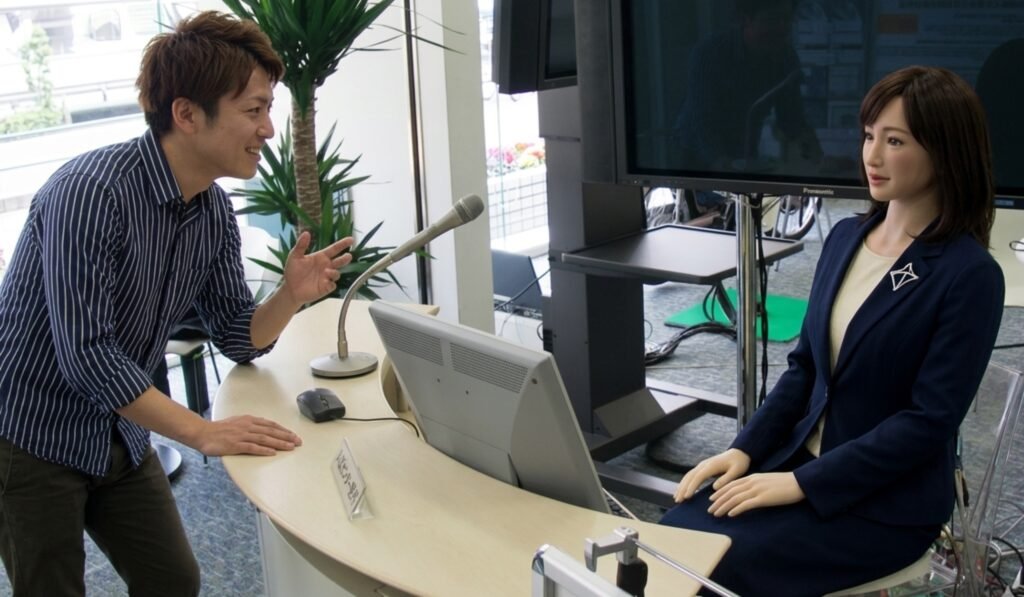
A university in Tokyo has opened a new research facility where robots handle medical experiments with little to no direct human involvement. The Institute of Science Tokyo launched the Robotics Innovation Center at its Yushima campus in April, bringing automation deeper into scientific research.
The lab currently runs with 10 robots, including a humanoid machine called Maholo LabDroid. These robots are designed to manage detailed laboratory work that normally requires trained staff.
Maholo uses two robotic arms to carry out sensitive tasks inside the lab. It can transfer precise amounts of reagents, handle lab tools, and open temperature-controlled equipment. Some processes, including cell cultivation, have already been automated.
University officials say the project is still in its early stages. They plan to expand the system over the next few years and aim to reach around 2,000 robots by 2040.
The project is led by Keiichi Nakayama, head of the center. He says robotics and AI will shape the future of scientific research in Japan. Robots also joined human guests during the opening ceremony.
The university believes automation can help research institutions handle growing challenges. One of the biggest problems is the shortage of skilled lab workers. Another concern is human error during repetitive experimental work.
Researchers at the center are now working toward a larger goal. They want automation systems to eventually support almost the full research cycle. That includes everything from generating hypotheses to running experiments and analyzing results.
The Maholo LabDroid is already being used outside Tokyo as well. A hospital in Kobe, Hyogo Prefecture, is already using the robot for ophthalmology research. It also helps with induced pluripotent stem cell work, especially cell culture tasks.
Some researchers from the Kobe project have also joined the Tokyo center. The university sees the new facility as an important step toward highly automated scientific laboratories in the future.