
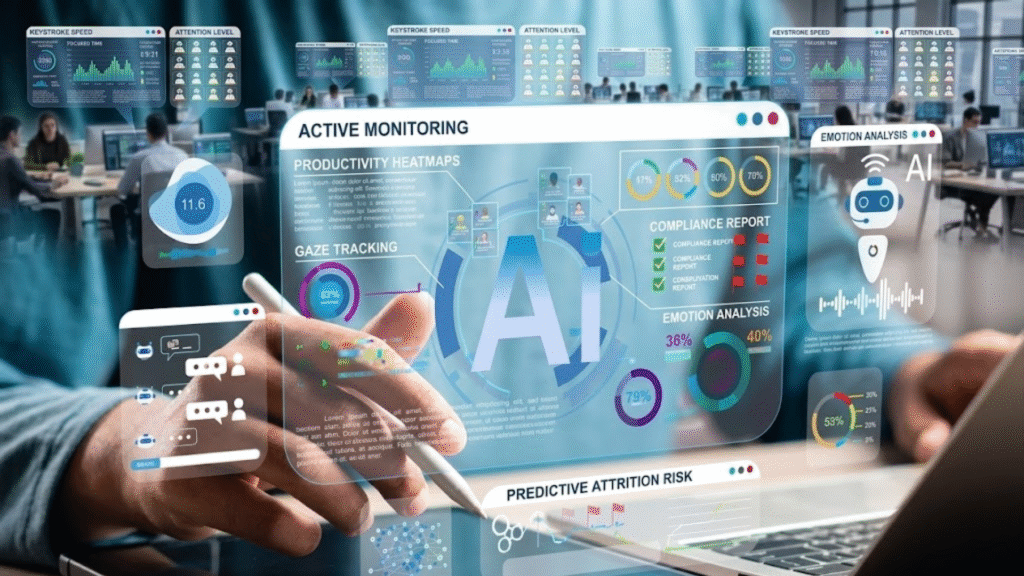
The biggest concern around artificial intelligence in workplaces is not only job loss. A deeper issue is starting to appear. The gap between workers who benefit from AI and those who are monitored by it is getting wider. Some employees use AI as support. It helps them reduce repetitive work and finish tasks faster. This group is usually found in higher-skilled roles. Analysts, consultants, lawyers, academics, and managers fall into this category. Their work becomes more flexible and less routine. For others, the situation looks different. AI does not act like a helper. It works more like a control system. It tracks activity, measures output, and shapes how work is done day to day. Recent data from the UK shows this is already happening. Around one in three employers now use workplace monitoring tools, often called “bossware.” These systems track online activity during work hours and feed it into automated dashboards.
AI tools are also used in scheduling, delivery routing, and performance tracking. They decide shift timings, estimate task duration, and check if workers meet expected targets. In many cases, software now handles decisions that used to be made by supervisors. Large tech companies show similar patterns. Some Amazon engineers have spoken about strong pressure linked to AI-based productivity systems. At Meta, reports suggest internal tools can track keystrokes, mouse movement, and clicks. That data is then used to train AI models. These methods are not limited to tech firms. Systems first used in warehouses and delivery networks are now moving into office environments, hospitals, and corporate settings. Algorithm-based management is becoming more common across sectors.
In Pakistan, most workplaces are still not using advanced AI monitoring at scale. But that may change as international companies expand operations in cities like Karachi, Lahore, and Islamabad. Call centers, outsourcing companies, and software houses are more likely to see these systems first. Many of these firms already work with global clients, which increases pressure to match international monitoring standards. There is also another factor. Pakistan does not yet have strong digital data protection laws. That creates uncertainty about how employee data would be collected, stored, or used if these systems become widespread.
A 2024 economic review referenced in discussions on AI shows that the main issue is not mass unemployment. The bigger concern is the difference in working conditions between people who use AI and those who are managed by it. That difference is not just about pay. It also affects control over work, stress levels, and daily independence. When software tracks every click, pause, or movement, the feeling of constant observation becomes part of the job. Small actions at work can be recorded and analysed. Even brief delays or changes in typing patterns may be measured. Over time, this creates pressure that is hard to ignore.
Experts describe this shift as more than a technical change. It raises questions about fairness and workplace balance. It also changes how power is shared between employers and workers. AI is not affecting everyone in the same way. Some people gain support and speed. Others face tighter monitoring and less freedom in how they work.