
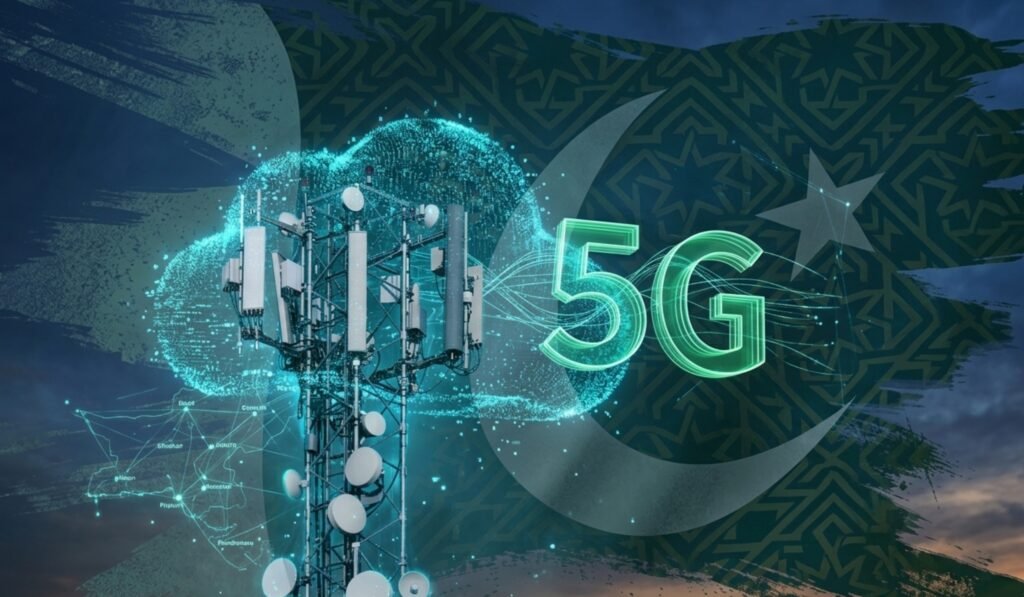
5G is now being talked about across Pakistan, but real use shows a different picture. In cities like Karachi and Lahore, people still face slow internet and weak signals. Islamabad also slows down during busy hours. Sometimes the connection works fine, then suddenly drops. Outside big cities, the situation is even harder. In areas like Balochistan and Azad Kashmir, fast and stable internet is still not common. Many places do not even get reliable 4G. The average internet speed in Pakistan is around 25 Mbps. This is one reason experts say moving to full 5G may be too early right now.
What Is 5G and Why It Needs Strong Infrastructure
5G is often described as the next step in mobile networks. Faster speeds, lower delay, and better support for connected devices. That’s the promise. But it does not work in isolation. Behind every fast connection, there is a network carrying that data. That network depends heavily on fiber optics. Without it, 5G becomes limited. You might see the label on your phone, but the performance won’t match expectations.
The Fiber Gap Holding Things Back
Right now, only about 15 to 18 percent of telecom towers in Pakistan are connected through fiber. The rest depend on microwave links. Microwave works, but only up to a point. It cannot handle the kind of traffic 5G is built for. As data demand increases, these links start to choke. Pakistan does have a fiber network, with over 211,000 kilometres installed. The issue is not total length. It’s how that fiber is spread out. Many areas simply do not have enough of it.
Delays and High Costs
Laying fiber is not just a technical job. It’s also a regulatory process. Different authorities control different areas. Municipal bodies, cantonments, development agencies. Getting approval from all of them takes time. Sometimes over a year. Then there’s cost. Companies often pay recurring charges per meter. In other countries, it’s usually a one-time fee. That difference matters. It turns infrastructure expansion into a long-term financial burden instead of a one-time investment.
Why Operators Are Holding Back
Connecting one tower with fiber can cost anywhere between $10,000 and $20,000. Multiply that across thousands of towers, and the numbers grow fast. At the same time, telecom companies are dealing with tight margins. User spending is low compared to global markets. Taxes are high. Inflation adds more pressure. So even if the need is clear, the pace of investment stays slow.
Skilled Workforce Is Limited
There’s another issue that doesn’t get as much attention. Skilled labor. Fiber installation is not simple work. It needs trained technicians for splicing, testing, and maintenance. That pool is still limited in Pakistan. Some operators may need to bring in outside experts, at least in the short term. That adds both cost and dependency.
Government Support Exists, but Gaps Remain
The government has allocated funds through the Universal Service Fund to support network expansion. A portion of that budget is aimed at improving fiber connectivity. That helps, especially in regions where private companies are less willing to invest. But funding alone won’t fix delays or policy issues. Those require coordination across multiple departments, which has been slow in the past.
Why Fiber Matters More Than People Think
A lot of attention goes to spectrum auctions when 5G is discussed. That’s important, but it’s only one piece. Without strong backhaul, meaning the system that carries data behind the scenes, spectrum cannot deliver full performance. Fiber plays that role. Without enough of it, networks hit capacity limits quickly.
What Needs to Change
Experts keep pointing to similar solutions. Faster approvals. Lower costs for laying fiber. Better coordination between telecom companies and government bodies. There’s also a target often mentioned. At least 60 percent of towers need fiber connectivity for 5G to work properly. Right now, Pakistan is far from that level.
A Short Window to Fix Things
There is still time, but not much. If the network does not improve, the gap will grow. Users will face slow speeds and weak signals. 5G may become just a name, not real progress. The next few years will decide everything.