
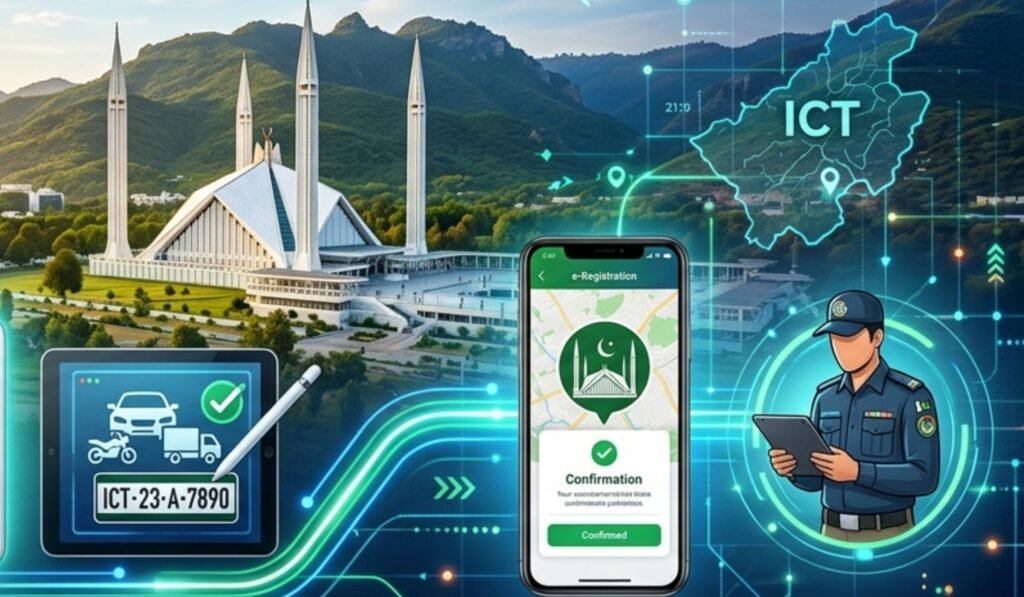
Islamabad’s ICT administration has rolled out a new online system for registering factories and shops. NITB is also involved in building the platform. The idea is simple enough. Move business registration out of paperwork and into a digital system that runs faster. For years, people had to deal with files, counters, and repeated office visits. Approvals often took longer than expected. That part is now being reduced, at least in theory.
How the Registration System Works
There is now an online portal for business registration. A business owner fills in details on the system and submits the application. After that, the request moves digitally from one stage to another. No physical file movement. No repeated visits just to check status. Once approved, registration is issued in digital form. It’s still early days, but the shift is clear. Manual process out, online system in.
What Is the Labour Inspection Management System (LIMS)?
Along with registration, another system has been launched. It is called the Labour Inspection Management System. This one is focused on workplace inspections. Earlier, inspections were handled through paper schedules and manual records. Everything depended on separate files and updates. Now, inspections are entered into a system. They can be assigned, tracked, and updated in real time. It sounds technical, but the basic change is simple. Less paperwork, more tracking in one place.
Why Authorities Are Doing This
Business registration in Islamabad has long been known for delays. Even small applications could take time due to manual handling. That creates frustration for new businesses, especially smaller ones that want a quick setup. The new system is meant to reduce that delay. Do not remove it completely, but shorten the process.
What Changes for Businesses
For business owners, the most noticeable change is fewer office visits. Applications go online. Updates also come online. Instead of waiting in queues or checking files manually, users can now track progress from a system dashboard. It saves time. It also removes some of the uncertainty that comes with manual processing.
Control and Record Keeping
There is also another angle here. Record accuracy. Every registration and inspection now leaves a digital trail. That means departments can trace what was approved, when it was approved, and who handled it. Less room for missing files or unclear records.
Bigger Shift in Government Services
This is not just about business registration. Islamabad is slowly moving more services toward digital systems. The direction is already visible. The goal seems to be fewer manual processes and more system-based governance. For now, focus stays on businesses and labour inspections, but this is likely only one part of a larger shift.