

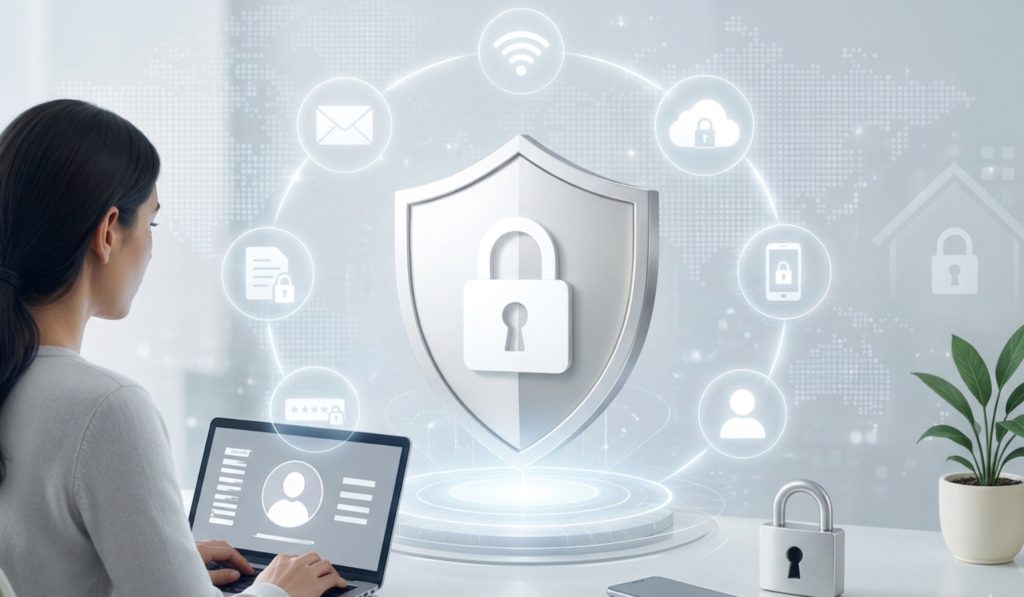
In today’s digital environment safeguarding personal information is vital f͏or ensuring privacy (important for individuals). With the rise of cyber threats and online scams, securing sensitive data should be a priority for everyone. Engaging in online banking e-commerce or social media makes the need for strong digital security more crucial than ever.
A key approach to improve personal data protection is creating distinct and intricate passwords for every account (i-e; accounts that demand security). Strong passwords must blend letters, numbers and symbols to boost online security. Adding two-factor authentication provides further personal data resistance through the necessity of extra confirmation. Embracing these methods allows individuals to take control of personal data and defend it from unwanted intrusions. Maintaining good personal data hygiene is undeniably the best tactic for safeguarding one’s identity. Proactive habits play a vital role in protecting personal data within a connected world (i-e; digital landscape). Maintaining these habits ensures greater security and awareness. Neglecting them can lead to potential breaches putting sensitive information at risk. What individuals choose to practice on a daily basis deeply influences their data safety. Prioritizing proactive habits allows for stronger defense against online threats.
Users should also be wary of sharing personal information online. Cybercriminals often trick people by using phishing emails and fake websites to collect sensitive data such as login credentials, financial information and identification details. Always check the authenticity of websites and do not click on suspicious links.
Another critical cybersecurity practice is keeping devices and software up to date. Software updates are often accompanied by security patches that address new vulnerabilities. Keeping your operating system, browser and applications up to date will greatly reduce the chances of falling victim to a cyberattack.
Public Wi-Fi networks can be dangerous as hackers could intercept unencrypted data. VPNs can be used to encrypt your internet traffic , and protect your personal information from being accessed by others on public networks , such as when you access sensitive accounts .
It’s also important to review privacy settings on social media sites. Many users share too much personal information unwittingly opening themselves up to exploitation by cybercriminals. Reducing public visibility and managing data-sharing permissions can enhance online privacy.
Businesses and individuals should also run reputable antivirus software and regularly back up important data. Data backups provide a way to recover information in the event of ransomware attacks, hardware failures, or accidental deletion.
As digital technologies are continuously evolving, security awareness is becoming an inevitable way to maintain privacy and security. With good online habits and strong security protocols, individuals can significantly reduce their vulnerability to cyber threats and protect their personal data in the digital age.