
The Paklaunch UNconference 2026 in Islamabad did not feel like a typical tech event. Fewer staged speeches, more direct conversations. Founders sat across from investors. Policy people joined in without long formal remarks. That setting made the discussion around Pakistan’s AI plans more grounded than usual.
Federal Minister for IT and Telecom Shaza Fatima Khawaja used that space to lay out what the government is trying to do next. Not a broad vision filled with buzzwords, but a mix of targets, gaps, and a few fixes already in motion.
The Real Gap. Computing Power
One point came up early and stayed central. Pakistan does not have enough computing power for serious AI work.
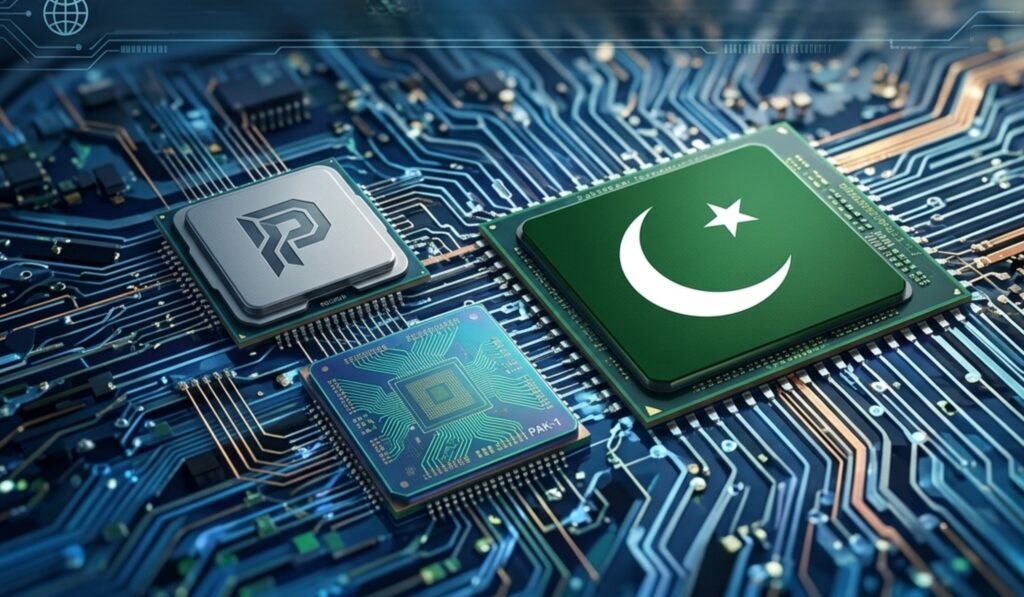
The minister spoke about bringing in GPUs and building local infrastructure that can support machine learning at scale. Right now, most startups rely on foreign cloud services. That works, but it comes with limits. Cost is one issue. Control is another.
Without local systems, even skilled teams slow down. Training models, running tests, deploying tools, all of it depends on access to compute. If that layer stays weak, progress in AI will stay uneven no matter how many people get trained.
There is no quick fix here. Setting up data centers and infrastructure takes time and money. Still, the fact that this gap is being discussed openly matters. For a long time, the focus stayed only on talent, not the systems behind it.
Training One Million People. Ambitious, but Tricky
The headline number is hard to ignore. One million people trained in artificial intelligence.
Pakistan already has a large base to work with. Millions of freelancers, many with basic tech skills. Some are already moving toward AI-related work like data labeling or automation tools. The plan seems to build on that.
But scale creates its own problems. Training a million people is one thing. Training them well is another.
Short courses and crash programs can produce certificates, not skills. If the training does not match what companies need, the gap remains. On paper, the numbers look strong. In practice, companies still struggle to find the right talent.
So the outcome depends on execution. Industry input, updated course content, and some level of quality control. Without that, the number becomes more of a headline than a result.
Export Target Jumps to 15 Billion Dollars
On the business side, the government has raised its expectations. IT exports, currently around 3.8 billion dollars, are now expected to reach 15 billion in the long run.
That jump sounds bold. It is.
To get there, Pakistan cannot rely only on outsourcing. That model brings steady income, but it has limits. The bigger gains usually come from products. SaaS platforms, subscription tools, systems that scale without adding equal cost.
Some Pakistani startups are moving in that direction, though not at scale yet. Many still depend on service work for survival. Shifting that balance will take time. It also needs funding, mentorship, and access to larger markets.
Policy Bottlenecks Still Exist
Another issue that came up during the discussion was regulation.
The minister mentioned ongoing work with the State Bank of Pakistan and the Special Investment Facilitation Council to revise Form M. For most people outside the industry, that sounds minor. For exporters, it is not.
Payment delays, compliance hurdles, and unclear rules have slowed down many IT companies. Even when they secure international clients, getting paid or moving funds can turn into a long process.
If these issues get resolved, companies can operate with less friction. If not, growth will keep running into the same wall, no matter how strong demand becomes.
What Paklaunch Is Trying to Do
Paklaunch itself plays a different role. It connects Pakistani founders with investors, many of them based abroad. Over the past few years, it has built a network that brings diaspora capital into local startups.
The UNconference format reflects that approach. Smaller groups, fewer formalities, more direct interaction. Founders get to explain their work without pitching to a crowd. Investors get a closer look at what is being built.
This kind of setup does not produce instant results. Deals take time. Still, it helps build relationships that do not come from large conferences where most conversations stay surface-level.
Competition Is Not Standing Still
Pakistan is not the only country pushing into AI and digital exports. India has a strong lead in both services and products. Vietnam and the Philippines continue to grow in outsourcing and tech services.
That means Pakistan cannot rely only on low cost or talent supply. It needs consistency. Policies that do not change every few months. Infrastructure that improves, even if slowly. Training that matches real demand.
Without that, early momentum fades. This has happened before in other sectors.
So What Changes Now?
The announcements at the UNconference show intent. There is a clearer focus on AI, infrastructure, and exports than before. That part is hard to deny.
What remains uncertain is the pace.
Building infrastructure will take years. Training programs will need constant updates. Export growth depends not just on local effort, but also on global demand and competition.
Still, something has shifted. The conversation is no longer limited to basic IT services. AI, data systems, and product development are now part of the plan.
If even part of this moves forward in a steady way, Pakistan’s position in the global tech market can improve. Not overnight, and not without setbacks, but enough to matter over time.