

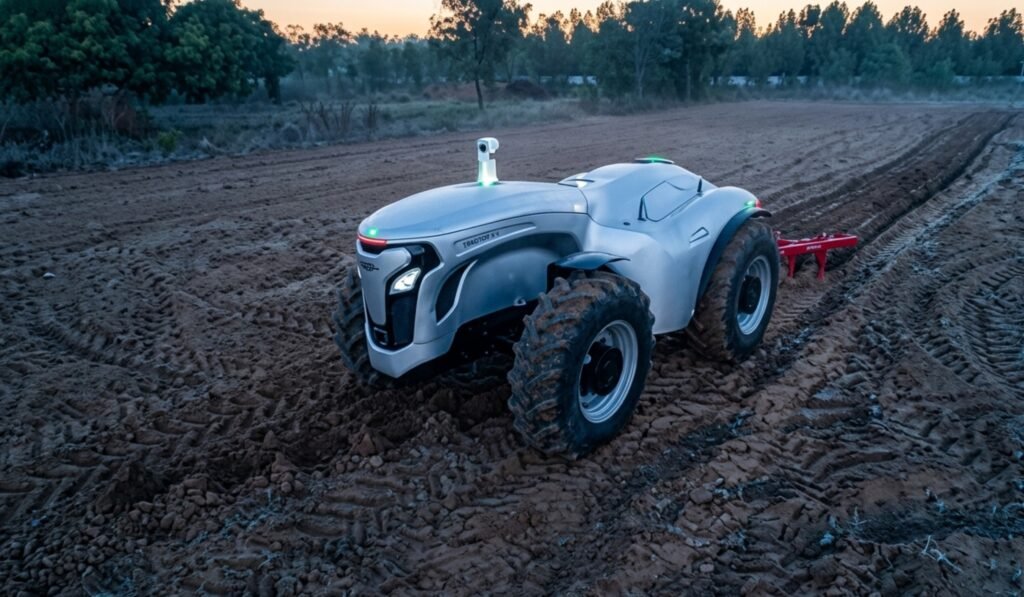
China launches AI, 5G and satellite navigation-powered self-driving tractors to make agriculture more productive. Self-driving tractors that operate and perform tasks on the field require less human manual work. The action is part of a broader effort to reform agriculture through advanced systems.
Across Chinese farms, digital tools now guide daily operations. Drones fly in formation to survey crops. Robots move through greenhouses and scan plants for disease. Sensors buried in soil track moisture and nutrients and send updates.
Control rooms manage this flow of data. Large screens display temperature, humidity, soil levels, and sunlight. Software processes the data and sends instant commands through 5G networks. Irrigation and fertilization systems respond without delay.
This setup is already in place in Tianjiaying village in Hubei Province. An industrial park runs 82 greenhouses through one connected platform. Farmers adjust ventilation, watering, and feeding from their phones, while machines handle much of the work.
According to a local technology director, one person can manage dozens of greenhouses at once. Labor costs drop, while crop yields rise by more than half.
Similar systems are spreading across the country. In Shaanxi, fish farms use automated systems to monitor water and control feeding. In Hebei, tomatoes grow in soil-free setups inside controlled environments that limit pests and improve food safety. In Xinjiang, tractors guided by the BeiDou satellite system plant seeds, install drip irrigation, and cover soil in a single pass.
The sector is growing fast. China’s smart agriculture market rose from 38.8 billion yuan in 2017 to about 100 billion yuan in 2024, with steady annual growth.
Officials view this shift as central to future food production. National programs support the use of digital platforms and new farming models across regions.
Rural communities are seeing direct gains. In Nanzhang, more than 300 households now take part in modern farming. Higher output and stable markets have raised incomes and reduced the need to migrate for work.
Workers also report better conditions. A 60-year-old villager in one greenhouse earns a steady monthly income while working close to home.
In Sichuan, land consolidation and shared machinery have transformed village farming. Income that once stood at a few thousand yuan per year has climbed to over 4 million yuan.
Smart farming is no longer a futuristic idea. In many rural areas, it has become part of everyday life. Experts in the country believe it is an important driver for increasing efficiency and improving Vietnam’s agricultural power.